
Why SBOMs matter for software buyers and regulators
For many UK SMEs, software is now a core business dependency. It runs customer services, stores data, supports finance, and keeps teams productive. That means the risk is no longer just whether a system works today. It is also whether you know what is inside it, who maintains it, and how quickly you can respond if a weakness is found.
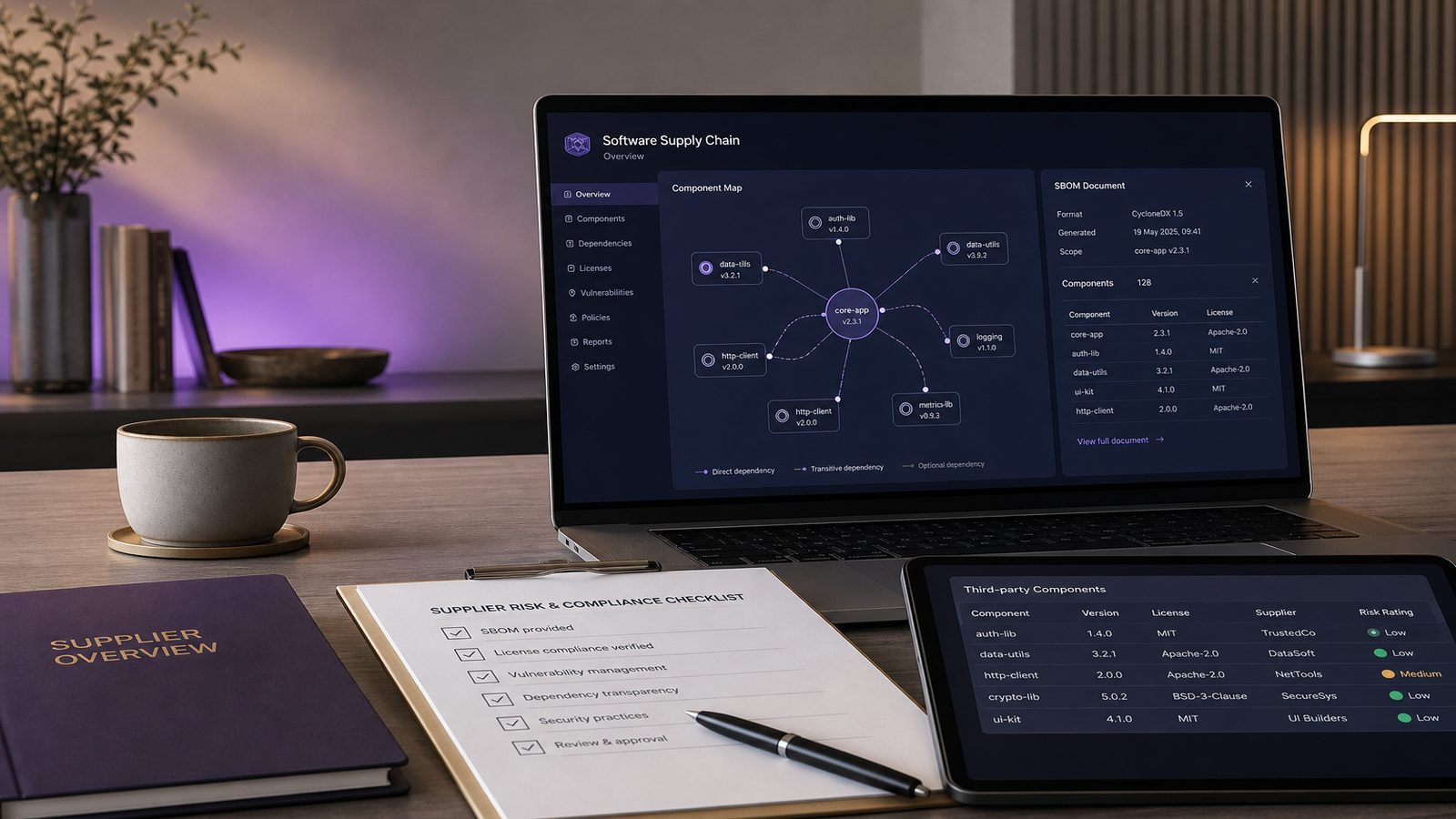
This is where a software bill of materials, usually shortened to SBOM, becomes useful. In simple terms, an SBOM is a list of the software components that make up an application or product. It helps buyers understand what they are actually purchasing, rather than relying on a supplier’s broad assurance statement.
For business owners and managers, the value of an SBOM is practical. It can reduce delays when a supplier issue appears, improve procurement decisions, and make it easier to judge whether a product is still safe to use. For regulators and larger customers, it also provides evidence that a supplier understands and manages software risk in a structured way.
What an SBOM is and why it matters
A software bill of materials is like an ingredients list for software. It shows the parts that have been used to build a product, including third-party libraries and other dependencies. These are the external building blocks that software teams often reuse to save time and cost.
That reuse is normal and often sensible. The problem is that one weak component can affect many products at once. If a supplier does not know what is inside their software, they may struggle to answer basic questions when a vulnerability is announced.
Buyers and regulators care about this because visibility reduces uncertainty. If you know which components are present, you can ask better questions, assess exposure more quickly, and decide whether a patch, workaround, or temporary control is needed.
The business risks SBOMs help reduce
SBOMs do not remove risk, but they do make it easier to manage. That matters because software issues often become business issues very quickly.
Faster decisions when a supplier component has a known weakness
When a widely used component has a weakness, the first question is usually: are we affected? Without an SBOM, the answer may take days of back-and-forth with the supplier. With an SBOM, the supplier can check more quickly and give a more informed response.
That speed matters because it reduces uncertainty for your business. It helps you decide whether to keep operating as normal, apply a workaround, or prioritise a change.
Lower disruption when you need to assess affected products
Many SMEs use several software products from different suppliers. If one of those suppliers has a problem, you may need to assess whether the issue affects customer data, internal systems, or critical operations. An SBOM makes that assessment more straightforward.
Instead of starting from scratch, you have a clearer picture of what the product contains. That can save time for internal teams and reduce the chance of unnecessary disruption.
Better supplier conversations and clearer accountability
An SBOM also improves the quality of supplier conversations. It shifts the discussion from general reassurance to specific evidence. That makes it easier to understand who is responsible for monitoring components, updating them, and responding when a weakness is found.
For SMEs, this is important because supplier risk is often managed informally. An SBOM gives you a more concrete basis for holding suppliers to account without turning procurement into a technical exercise.
What software buyers should ask for
If you buy software, you do not need to become a developer to use SBOMs well. You do need to ask the right questions.
Which products need an SBOM and in what format
Start with the software that matters most to your business. That may include customer-facing systems, finance tools, platforms holding sensitive data, or products that support regulated activity.
Ask suppliers whether they can provide an SBOM for the product you are buying. You do not need to insist on a particular technical format unless your organisation has a reason to do so. What matters first is that the SBOM is readable, usable, and tied to the product version you are actually receiving.
How often the SBOM should be updated
An SBOM is only useful if it stays current. Software changes over time, and so do the components inside it. Ask suppliers how often they update the SBOM and how they will tell you when a material change has been made.
If the supplier cannot explain this clearly, that is a warning sign. A one-off document is not enough for software that changes regularly.
What support the supplier provides when components change
It is also worth asking what happens when a component is replaced, removed, or found to be weak. Will the supplier notify customers? Will they provide a revised SBOM? How quickly can they confirm whether your version is affected?
These questions help you judge whether the supplier has a real process, rather than just a document.
How regulators and customers use SBOMs
Transparency is becoming a normal part of software procurement. Regulators, large customers, and public sector buyers increasingly want evidence that suppliers understand what is in their products and can respond when issues arise.
An SBOM supports that expectation because it gives a structured view of software composition. It can help demonstrate that a supplier is managing dependencies rather than leaving them hidden.
For SMEs, this is relevant even if no formal requirement applies to your business today. Many organisations sell into larger supply chains, and those customers may expect more evidence over time. Having an SBOM approach in place can make you easier to work with and reduce friction in procurement.
It also supports evidence-based risk management. Rather than relying on assumptions, you can make decisions based on what is actually present in the software.
What a useful SBOM should include
Not every SBOM is equally helpful. A useful one should give you enough information to identify the product, understand what is inside it, and link it to the version you are using.
Core information buyers should expect to see
At a minimum, you should expect an SBOM to identify:
- The product name
- The version or release it relates to
- The components included in that version
- Any known dependencies that are part of the build
- Information that helps you match the SBOM to the software you have bought
You may also want to know whether the supplier has checked the components for known weaknesses and how they handle updates.
Why completeness and freshness matter more than format alone
It is easy to focus on the file format and miss the bigger issue. A neatly packaged SBOM is not very useful if it is incomplete or out of date. Likewise, a simple SBOM can still be valuable if it is accurate and current.
For buyers, the key question is not whether the document looks sophisticated. It is whether you can rely on it when you need to make a decision.
Common mistakes SMEs make when relying on SBOMs
SBOMs are useful, but they are not a silver bullet. A few common mistakes can reduce their value.
Treating an SBOM as a one-time document
Some organisations ask for an SBOM at procurement stage and never look at it again. That is not enough. Software changes, suppliers change components, and new weaknesses are discovered all the time.
If you use SBOMs, build them into your review cycle. That may mean checking them at renewal, after major updates, or when a supplier issue is announced.
Assuming an SBOM removes the need for supplier checks
An SBOM gives visibility, but it does not replace supplier due diligence. You still need to understand how the supplier develops, tests, patches, and supports the product.
Think of the SBOM as one useful input, not the whole answer.
Not linking SBOMs to vulnerability and patch processes
There is little value in collecting SBOMs if nobody uses them. They should be linked to your vulnerability management and patching process so that known issues can be assessed quickly.
That does not need to be complicated. It can be as simple as making sure the right person knows where the SBOM is stored and who to contact if a component becomes a concern.
A simple SBOM checklist for buyers
If you want to start using SBOMs without overcomplicating it, use a short checklist in procurement and renewal reviews.
- Does this product have an SBOM?
- Does the SBOM match the version we are buying or using?
- How often is it updated?
- How will the supplier tell us if a component changes?
- Who in our business will review it if a weakness is announced?
- Where will we store it so it can be found quickly?
It is also sensible to keep SBOMs with your supplier records, so that they are easy to find during a review or incident.
How to get started without overcomplicating it
You do not need to roll out SBOMs across every supplier at once. Start with the software that would cause the most business disruption if it failed or became unsafe to use.
That usually means systems that handle customer data, support revenue, or are difficult to replace quickly.
Then build SBOM review into existing processes rather than creating a new one. For example, you can add it to:
- Supplier onboarding
- Contract renewal
- Major software updates
- Risk reviews for critical systems
This approach keeps the work manageable and makes SBOMs part of normal business practice.
For UK SMEs, the main benefit is not technical elegance. It is better decisions, faster response, and fewer surprises when software issues arise. That is why SBOMs matter for software buyers and regulators alike.
If you want help turning this into a practical supplier or software risk process, speak to a consultant who can help you fit it into your existing governance without adding unnecessary complexity.
Frequently asked questions
Do we need an SBOM for every piece of software we buy?
Not necessarily. Start with the software that carries the most business, security, or compliance risk. For lower-risk tools, an SBOM may be useful but not essential.
Is an SBOM enough to prove a supplier is secure?
No. An SBOM helps with visibility, but it does not prove the supplier tests well, patches quickly, or manages risk effectively. It should be used alongside other supplier checks.
Comments are closed