
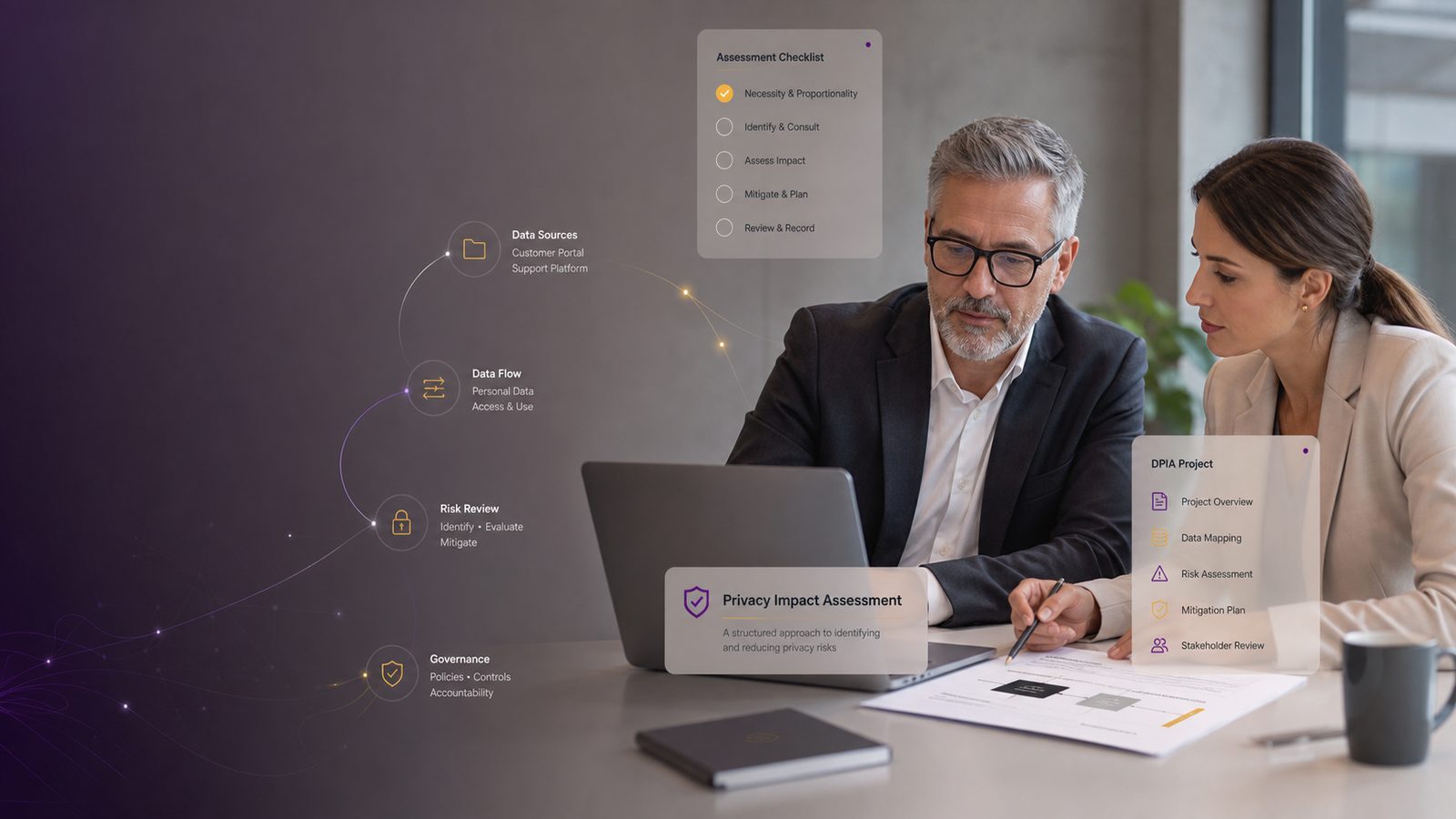
What a data protection impact assessment is and why it matters
A data protection impact assessment is a structured way to think through the privacy risks in a project before you launch it. For a UK SME, that matters because problems are usually easier and cheaper to fix early than after a system has gone live, staff have started using it, or customers have been affected.
In plain English, it is a practical check that asks: what personal data are we using, why are we using it, what could go wrong, and what can we do to reduce the risk? It is not meant to slow the business down. Used well, it helps you make better decisions, avoid rework, and show that you have thought carefully about how you handle personal data.
A plain English definition
You can think of a data protection impact assessment as a short, focused review for higher-risk projects. It is especially useful when a change could affect people’s privacy in a new or more significant way. That might be because you are collecting more data, using it in a different way, sharing it with another organisation, or introducing a new system that changes how information is accessed.
When it helps a business make better decisions
For smaller businesses, the value is often practical rather than formal. It can help you:
- spot privacy issues before they become customer complaints
- avoid expensive changes after a system has been built
- choose a simpler design where possible
- document why a decision was reasonable at the time
- give managers a clearer view of the trade-offs between convenience, cost, and risk
When your business should consider one
You do not need to treat every project as a major exercise. The right approach is to use a data protection impact assessment when the privacy risk is likely to be higher than normal. For many SMEs, that means checking for a few common triggers at the start of a project, not waiting until the end.
Common triggers for UK SMEs
Consider one if your project involves any of the following:
- new software that stores or analyses customer or employee information
- monitoring people, such as CCTV, call recording, location tracking, or activity logging
- sensitive information, such as health details, financial information, or information about children
- large amounts of personal data
- sharing data with suppliers, partners, or group companies in a new way
- automated decisions that affect people, such as scoring, filtering, or prioritising them
- combining data from different sources to build a fuller profile of someone
Examples such as new systems, monitoring, or sensitive data
A few simple examples make this easier to judge. If you are introducing a new customer relationship system that brings together sales notes, support tickets, and marketing preferences, the privacy impact may be greater than it first appears. If you are rolling out staff monitoring software, the issue is not just whether it works, but whether it is proportionate and clearly understood by staff. If you are handling health-related information for a service, the consequences of a mistake are usually more serious, so the assessment should be more careful.
If you are unsure, it is usually better to pause briefly and ask the question than to assume the project is too small to matter. A short assessment can still be worthwhile even if the final conclusion is that the risk is low.
What to include in a practical assessment
A good assessment does not need to be long. It needs to be clear, honest, and specific to the project. The aim is to show what you are doing, what could go wrong, and what you are doing about it.
Describe the project, data, and people involved
Start with the basics:
- what the project is trying to achieve
- what personal data will be used
- whose data it is, such as customers, staff, suppliers, or website users
- where the data comes from
- who will access it
- which suppliers or systems are involved
This section should be understandable to a manager who is not close to the technical detail. If the description is too vague, the rest of the assessment will not be useful.
Identify risks, controls, and any gaps
Next, think about what could go wrong. Common privacy risks include using more data than you need, allowing too many people to see it, keeping it for too long, or failing to explain the use of the data clearly. Then note the controls you already have, such as access restrictions, staff training, retention rules, supplier checks, or encryption.
It is also important to record any gaps. For example, you may find that the project needs a clearer privacy notice, a better process for deleting old records, or a stronger contract with a supplier. The assessment is most valuable when it leads to action, not when it simply records that a risk exists.
How to run the assessment without overcomplicating it
Many SMEs worry that this kind of review will become a large, slow process. It does not have to. The best approach is proportionate and tied to the size of the change.
Who should be involved
For a small business, the right people are usually:
- the project owner or business lead
- someone who understands how the data will be used day to day
- an IT or supplier contact if systems are changing
- someone responsible for data protection or governance, if you have that role
If you use external support, keep the business in control of the decision. Outside help can be useful for structure and challenge, but the business still needs to understand and own the outcome.
How to keep the process proportionate for a small team
To keep it manageable:
- start early, before design decisions are fixed
- use a short template rather than a long report
- focus on the highest risks first
- set a clear deadline for actions before launch
- avoid repeating the same review for every minor change
A useful rule is to treat the assessment as part of project planning, not as a separate compliance task at the end. That makes it easier to change the design while there is still time to do so.
What good outcomes look like
When done well, a data protection impact assessment should improve the project rather than block it. The best outcome is not a perfect document. It is a better decision.
Reducing privacy risk before launch
Good assessments often lead to simple but important changes. You may decide to collect less data, limit access to fewer people, change a supplier, improve staff instructions, or delay launch until a key control is in place. These changes can reduce the chance of a privacy problem and make the project easier to support later.
Supporting clearer decisions and better records
It also helps to keep a record of why you made the decision you did. That matters if a customer asks questions later, if a supplier relationship changes, or if your team needs to revisit the project in the future. A clear record can save time and reduce confusion because people can see what was considered and what was agreed.
Common mistakes SMEs can avoid
Most problems with these assessments come from timing or attitude, not from complexity. A short, sensible process is usually enough. The main thing is to avoid treating it as a box-ticking exercise.
Treating it as a paperwork exercise
If the assessment is only written to satisfy a policy, it will not help the business. A useful review should influence the design of the project. If it does not change anything, that may be a sign the questions were too shallow or the right people were not involved.
Leaving the assessment too late
One of the most common mistakes is starting after the system has already been chosen, contracted, or built. At that point, the options are narrower and changes are more expensive. The earlier you identify privacy risks, the easier it is to manage them in a practical way.
A simple checklist for getting started
If you are unsure where to begin, use a short checklist. It is often enough to decide whether a fuller assessment is needed.
Questions to ask before you begin
- Are we using personal data in a new way?
- Could this project affect people’s privacy more than usual?
- Are we handling sensitive information or a large volume of data?
- Will a supplier or partner have access to the data?
- Could the project create monitoring, profiling, or automated decisions?
- Do we already have clear controls in place?
What to review before you go live
- the purpose of the project
- the data being collected
- who can access it
- how long it will be kept
- what people have been told about it
- what risks remain and who owns the actions
If the answers are unclear, the project is probably not ready to go live. That does not mean it must stop. It means the business should finish the review, close the gaps, and then decide whether the remaining risk is acceptable.
For UK SMEs, the real value of a data protection impact assessment is simple: it helps you make better decisions before a problem becomes costly. It is a practical management tool, not just a compliance document.
If you would like help turning this into a light-touch process that fits your business, speak to a consultant.
Frequently asked questions
When does a UK SME need to do a data protection impact assessment?
You should consider one when a project is likely to create a higher privacy risk than normal. Common examples include new systems, monitoring, sensitive data, large-scale data use, or new sharing arrangements with suppliers. If the project is low risk, a short documented check may be enough.
What is the difference between a data protection impact assessment and a general risk assessment?
A general risk assessment looks at business risks more broadly, such as cost, delivery, and operational issues. A data protection impact assessment focuses specifically on privacy risks for people whose data you handle. In practice, the two can sit alongside each other, but they are not the same thing.
Comments are closed