
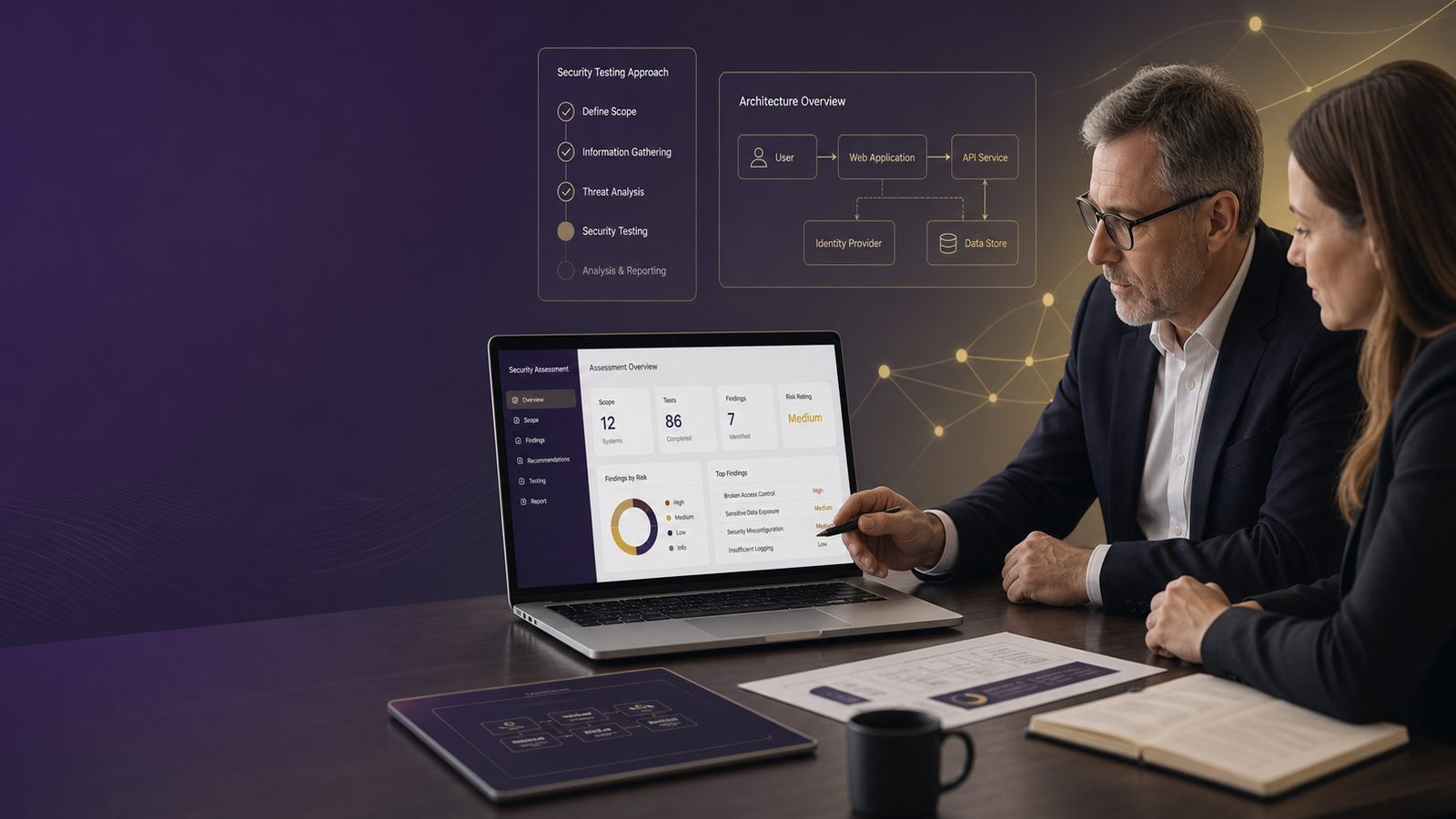
When and why to commission security testing
For many UK SMEs, security testing is easiest to justify when something has already gone wrong. That is usually the most expensive time to start. A better approach is to test when the business is changing, when the risk is rising, or when a decision depends on having confidence in a system.
Done well, security testing helps you avoid avoidable costs. It can reduce the chance of service disruption, customer loss, emergency fixes, and reputational damage. It also gives managers a clearer view of where the real weaknesses are, rather than relying on assumptions.
The key is not to test everything all the time. It is to test the systems, services, and suppliers that matter most, at the right moment, with a clear plan for what happens next.
Key takeaways
- Commission security testing when a real business change, contract, or risk decision depends on confidence in the system.
- Focus testing on the systems and data that would cause the most harm if they failed or were misused.
- Choose the test type and scope to match the business objective, not just to tick a box.
- Make sure every test ends with a clear remediation plan and, where needed, retesting.
What security testing is and what it is for
Security testing is a structured way of checking how well a system resists misuse, mistakes, and attack. It can include automated checks, manual review, and simulated attacks carried out in a controlled and authorised way.
How it helps reduce business risk
For a business owner or manager, the main question is simple: what could this cost us if we get it wrong? Security testing helps answer that by showing where weaknesses could lead to:
- Loss of customer data or confidential business information
- Interrupted trading or a service outage
- Unexpected recovery and repair costs
- Contract failure or lost sales
- Damage to trust with customers, partners, and investors
It is especially useful when you are launching something new or changing something important. A system can look fine in development and still fail under real use, especially where access controls, data handling, or supplier connections are involved. If your team is still building the basics, it can help to read our guide on why secure software development matters alongside this article.
What it can and cannot tell you
Security testing is not a guarantee that a system is safe. It is a point-in-time check based on the scope, time, and access provided. A good test can show you where the weaknesses are most likely to be, but it cannot prove that nothing else exists.
That matters because some SMEs expect a test report to act like a certificate of safety. It does not. What it can do is help you make a better decision about release, investment, supplier risk, or remediation priority.
When a UK SME should commission security testing
The best time to commission testing is usually before risk becomes expensive. In practice, that often means before launch, after change, or when a new business obligation appears.
Before a new system, app, or major change goes live
If you are about to launch a customer portal, payment flow, booking system, internal business application, or cloud service, testing should be part of the release plan. The earlier you find a weakness, the cheaper it is to fix.
This is particularly important when the system handles personal data, payments, login details, or anything that would be embarrassing or costly to expose. It is also sensible when a new feature changes how people sign in, share data, or approve actions.
Testing before go-live helps you avoid the common trap of discovering problems only after customers start using the service. At that point, fixes can be slower, more disruptive, and more visible.
After significant changes to code, infrastructure, or suppliers
Security risk changes when the technology changes. That includes new code, new hosting, new integrations, new identity tools, and new suppliers. Even a change that seems small can create a new weakness if it affects permissions, data flow, or trust between systems.
If you have recently changed a payment provider, added a third-party login service, moved to a new cloud platform, or integrated with another business system, it is sensible to test again. If the change affects a critical path, do not assume the previous test still applies.
This is also where supplier risk matters. Third-party software can introduce weaknesses you do not directly control, so testing should reflect the full service, not just your own code. Our article on how third-party software introduces cyber risk for UK SMEs explains why that matters in practice.
When handling sensitive data or entering a new contract
If a system stores personal information, financial details, health-related information, or commercially sensitive material, the business impact of a failure is higher. The same is true when a customer or partner contract requires stronger assurance before you can start work.
In these cases, testing is not just a technical exercise. It is part of managing commercial risk. It can help you show that you have taken reasonable steps to understand and reduce the exposure before committing to a new relationship.
Common business triggers that make testing worthwhile
Some triggers are obvious, such as a new launch. Others are more subtle, but just as important.
New customer, investor, or supplier requirements
Security testing is often commissioned because someone else asks for evidence. A larger customer may want assurance before onboarding you. An investor may want to understand whether your product is resilient. A supplier may require proof that your controls are mature enough to connect to their environment.
Rather than treating this as paperwork, use it as a chance to test the parts of the business that matter most. If a contract depends on a system being trustworthy, then testing can support both the commercial conversation and the operational one.
Following a security incident or near miss
A near miss is often a warning that the current controls are not strong enough. That might be a suspicious login, a misconfigured access rule, a leaked secret, or a bug that was found before it was exploited.
After an incident, testing can help answer two questions: what failed, and what else might fail in the same way? That makes the work more useful than simply patching the immediate issue and moving on.
If you are already dealing with an incident, testing should be planned carefully so it does not interfere with recovery. In some cases, a targeted review is more useful than a broad test straight away.
Regular testing as part of a risk-based programme
For many SMEs, the right answer is not one-off testing, but a simple programme based on risk. That might mean testing key systems annually, testing major changes before release, and testing supplier-connected services whenever the dependency changes.
This approach is usually more cost-effective than ad hoc buying. It also helps you compare results over time, so you can see whether the business is actually getting safer or simply collecting reports.
Which type of testing fits which situation
Not every test is the same. Choosing the right type matters because it affects cost, disruption, and the value of the findings.
Vulnerability scanning versus penetration testing
Vulnerability scanning is usually automated. It looks for known weaknesses, missing patches, and common misconfigurations. It is useful for regular checks and broad coverage, but it does not always show how weaknesses combine in practice.
Penetration testing is more manual and more focused. It tries to show how an attacker might chain issues together to reach something valuable. That makes it better for important systems, public-facing services, and situations where you need a deeper view of real-world risk.
In simple terms, scanning tells you what may be wrong. Penetration testing helps show what could actually matter to the business.
Web applications, internal systems, and cloud services
Web applications often need testing because they are exposed to customers, partners, or the wider internet. Internal systems can also be high risk, especially if staff have broad access or if a compromise could spread across the network. Cloud services need testing too, particularly where access controls, storage, and integration points are involved.
If your business has a customer-facing application, a good starting point is often a focused web application test. If your concern is internal access or movement between systems, the scope may need to include identity controls, remote access, and internal network paths.
For teams building or maintaining web services, our guide to web application testing with Burp Suite gives useful context on what a focused web test can cover.
When to use specialist testing for mobile, APIs, or third parties
Some systems need specialist attention. Mobile apps can store data locally or rely on insecure device settings. Application programming interfaces, which are the connections between systems, can expose data or actions if they are not designed carefully. Third-party services may also need review if they sit in the middle of a critical business process.
If the system is unusual, do not assume a standard test will be enough. Ask the provider how they would adapt the approach to your environment and whether they have tested similar systems before.
How to decide the right scope without overbuying
One of the easiest ways to waste money is to buy a broad test with no clear business objective. A better scope starts with the assets that matter most.
Prioritising the most important assets and data flows
Start with the systems that would hurt most if they failed or were misused. That usually means:
- Customer-facing applications
- Systems that store personal or financial data
- Admin portals and privileged access paths
- Supplier integrations and shared services
- Anything that would stop the business trading if it went down
Then map the main data flows. Ask where information enters, where it is stored, who can access it, and which external services are involved. This helps the tester focus on the areas where a weakness would have the biggest impact.
Choosing realistic test boundaries and exclusions
Good scope is specific. It should say what is in, what is out, what access is available, and what assumptions the tester can make. If you exclude too much, the result may be too limited to be useful. If you include too much, the test may become expensive and unfocused.
Be clear about production systems, test environments, timing windows, and any parts of the service that must not be touched. This reduces disruption and avoids misunderstandings later.
Making sure the brief matches the business objective
The brief should reflect the reason you are testing. If the goal is to support a customer contract, the scope should focus on the service that customer will use. If the goal is to understand whether a release is safe, the scope should focus on the changed parts of the system.
A vague brief often produces vague findings. A clear brief gives you a report that is easier to act on.
What good security testing looks like in practice
A useful test is not just about technical skill. It is about clarity, realism, and follow-through.
Clear rules of engagement and agreed timing
Before testing starts, both sides should agree the rules. That includes the systems in scope, the dates and times, the contact points for urgent issues, and what the tester should do if they find something serious.
This is especially important for live services. You want to reduce the chance of disruption while still allowing the tester to work realistically.
Actionable findings ranked by business impact
The best reports explain what was found, why it matters, and what to fix first. They should not just list technical issues. They should help you understand the likely business effect, such as account takeover, data exposure, service interruption, or loss of trust.
If a report is full of technical detail but does not help you prioritise, it is less useful than a shorter report with clear actions.
Retesting and follow-up after fixes
Testing only creates value if the findings are fixed. Ask in advance whether retesting is included, how it will be scheduled, and what evidence will be provided when issues are closed.
Retesting matters because it confirms that the fix worked and that it did not create a new problem elsewhere. It also gives you a better record of improvement over time.
How to prepare your organisation before testing starts
Preparation does not need to be complicated, but it does need to be deliberate.
Who needs to know and what to share
Make sure the right people know the test is happening. That usually includes the business owner, the system owner, the technical contact, and anyone responsible for customer support or operations.
Share only what is needed for the agreed scope. That may include test accounts, system diagrams, contact details, and any known constraints. If the tester needs access to logs or configuration details, agree that in advance.
How to avoid disruption to live services
Plan the timing carefully if the system is customer-facing or business-critical. Avoid peak trading periods where possible. Make sure there is a clear way to pause the test if something unexpected happens.
If your team has not tested live systems before, start with a smaller scope or a less critical service. That builds confidence and reduces the chance of avoidable disruption.
What evidence and access the tester may need
Depending on the scope, the tester may need read-only access, test accounts, sample data, or limited administrative visibility. The goal is to let them assess the system properly without giving unnecessary access.
Be cautious about over-sharing. At the same time, do not make the test so restricted that it cannot produce meaningful results.
How to use the results to improve security
A report should lead to action. If it does not, the spend has limited value.
Turning findings into a practical remediation plan
Start by grouping findings into urgent, important, and longer-term work. Fix the issues that could lead to the most serious business impact first. Then assign owners and dates so the work does not drift.
Where possible, link the findings to existing change or maintenance work. That makes remediation easier to manage and less disruptive to the business.
Tracking repeat issues and control gaps
If the same type of issue keeps appearing, that usually points to a control gap rather than a one-off mistake. For example, repeated access control problems may mean reviews are weak. Repeated configuration issues may mean change management needs tightening.
Tracking patterns over time helps you move from fixing symptoms to improving the underlying process.
Using results to support board-level decisions
For senior decision-makers, testing results are useful because they turn technical risk into business choices. They can help answer whether to delay a release, invest in a fix, change a supplier, or accept a risk with eyes open.
That is often where the real value lies. Good testing supports better decisions, not just better technical reports.
How to choose a testing provider
Price matters, but it should not be the only factor. The cheapest option can become expensive if the scope is wrong or the findings are not useful.
Questions to ask before you commission work
Ask what type of testing they recommend and why. Ask how they would scope the work for your business objective. Ask what information they need from you, how they handle live systems, and what the report will include.
You should also ask how they deal with urgent findings, whether retesting is included, and whether they have experience with similar systems or sectors.
Why experience with similar SME environments matters
An experienced provider should understand the practical limits of an SME. That means working around small teams, limited downtime, mixed technology, and the need to keep the business running.
They should also be able to explain the findings in plain English. If a provider cannot translate technical issues into business impact, the report may be hard to use.
How to compare quotes without focusing only on price
Compare scope, depth, reporting quality, retesting, and support after the test. A slightly higher quote may be better value if it covers the right systems and gives you clearer actions.
Look for evidence that the provider understands your business objective, not just your technology stack.
A simple commissioning checklist for SMEs
If you want a straightforward way to decide whether to commission testing, use this checklist:
- Define the asset, objective, and deadline
- Confirm the systems, data, and suppliers in scope
- Agree what access and evidence the tester will need
- Plan timing to reduce disruption to live services
- Ask for findings ranked by business impact
- Agree who will fix issues and by when
- Confirm whether retesting is included
If you can answer those points clearly, you are in a good position to buy useful testing rather than just a report.
For SMEs, the right question is not whether security testing is worth doing. It is when it will give you the most value. In most cases, that is before a major change, after a meaningful shift in risk, or when a commercial decision depends on confidence in the system.
If you would like help deciding what to test, how to scope it, or how to turn the results into a practical plan, speak to a consultant.
FAQs
When should security testing be done?
Security testing should be done before a new system goes live, after major changes, when sensitive data is involved, and whenever a contract or business decision depends on confidence in the controls. Many SMEs also benefit from regular testing of their most important systems.
What is the purpose of security testing?
The purpose of security testing is to find weaknesses before they become business problems. It helps you understand where the real risk sits, what could fail, and what to fix first so you can reduce the chance of disruption, data loss, and reputational damage.
Comments are closed